USDA Secretary wants to ‘deconstruct’ SNAP. Changes are already happening
The Department of Agriculture plans sweeping changes to the country’s Supplemental Nutrition Assistance Program and other USDA-administered welfare programs with the aim of eliminating fraud and misuse. Details about the plan aren’t yet known, but policy analysts said changes from the One Big Beautiful Bill could either reduce or eliminate benefits for millions.
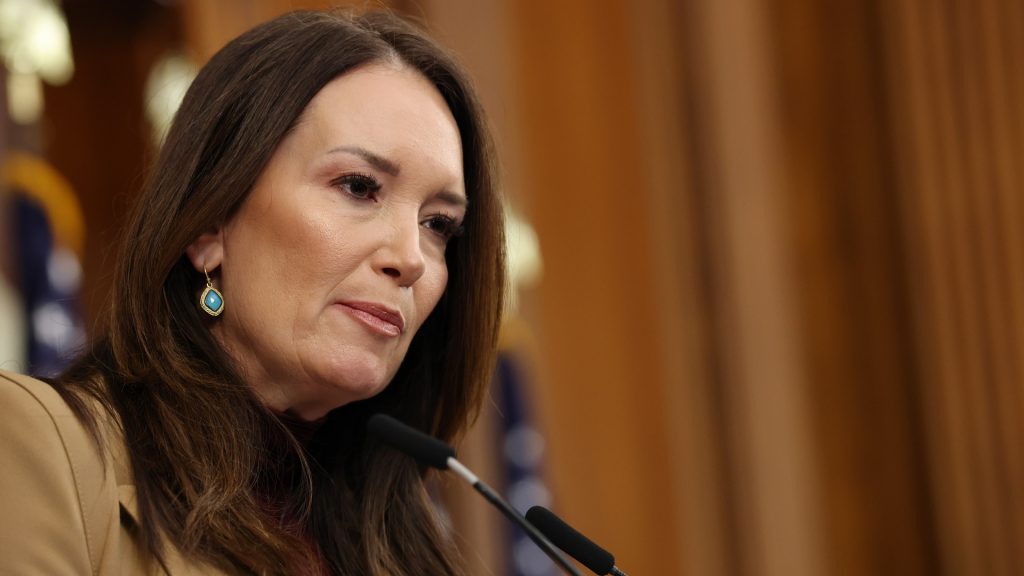
USDA Secretary Brooke Rollins said changes were coming on Fox News nearly two weeks ago and hinted they could be major. She told the network that the 43-day government shutdown allowed her to see inadequacies with SNAP.
“But I think what was an unintended consequence of the Democrats shutting the government down for 43 days is it shined this very bright light on one of their pet programs, and now has given us a platform to completely deconstruct the program,” Rollins said.
She declined to say more. But she wrote on X Monday that all USDA programs are under review “to ensure only legal citizens are receiving benefits.”
USDA handles a number of federal assistance programs, including SNAP; Women, Infants and Children, known as WIC; the National School Lunch Program and others.
Changes have already happened after President Donald Trump signed the Republican-drafted One Big Beautiful Bill, which made sweeping budget changes to many federal departments and programs. The Urban Institute, a public policy founded by former President Lyndon B. Johnson’s administration, projected SNAP changes would affect 22.3 million families.
About 1 in 8 Americans receive SNAP benefits.
Changes under July bill
According to the One Big Beautiful Bill, a number of changes are being implemented for SNAP that modify who is eligible for benefits, employment requirements and how much states pay for the program. Some changes started on Oct. 1 and Nov. 1, while others are scheduled to begin in the coming years.
One of the biggest changes to the program was eliminating eligibility for legal immigrants such as refugees, asylum seekers and trafficking survivors, according to the USDA.
Oregon Attorney General Dan Rayfield filed a multi-state lawsuit on Nov. 26 that challenged those new requirements. He claimed the USDA implemented changes immediately without a required 120-day grace period. USDA sent the memo to states on Oct. 31.
The other big change is an expansion of employment requirements for recipients, which started on Nov. 1. States have issued guidance to SNAP recipients about work requirements.
People aged 18 and 64 must complete at least 20 hours of work a week and report those hours, unless they have a dependent under 14 years of age and are physically and mentally able to work. Those 20 hours could be done at a job, volunteering or participating in an education or training program.
Foster youth aging out of foster care, veterans and those experiencing homelessness are no longer exempt from the requirement.
“Right now, we are requiring states turn over recipient data to fight waste, fraud, and abuse,” Rollins wrote Monday. “Even though 22 blue states have refused to provide the data, we are using every tool to compel their compliance.”
The data USDA has received — from nearly 30 states — revealed 186,000 deceased people got benefits and 356,000 duplicate enrollments, Rollins has claimed.
While fraud did account for about 12% of SNAP funds in 2023, it was typically carried out by criminal networks who exploited the antiquated systems that Electronic Benefits Transfer cards use. Most fraud started at a store with skimming devices installed on card readers unbeknownst to store owners.
Multiple law enforcement agencies arrested 48 members of a Romanian crime ring last year who used skimming devices to steal SNAP funds from low-income Californians. Similar schemes were uncovered since the arrest in New York, Pennsylvania, Louisiana and other states.
Broad-based categorical eligibility for assistance
The Trump administration is now targeting broad-based categorical eligibility, according to a proposed rule change the USDA filed on Oct. 24 with the White House Office of Management and Budget. Currently, people can become eligible for SNAP if they’re enrolled in a state program funded by the Temporary Assistance to Needy Families.
No one receives direct money from the federal program, according to the U.S. Department of Health and Human Services. Instead, states are given the funds and they are dispersed to help families care for children, end dependence on government benefits, reduce or prevent single-parent pregnancies.
States and tribes have used the TANF program to offset utility costs, pay for shelter and cover emergency costs, among other things.
A right-leaning think tank, the American Enterprise Institute, proposed eliminating the eligibility plan along with reworking SNAP requirements so families don’t experience abrupt, major benefit losses.
About 5.6 million people are eligible for SNAP due to the eligibility program.
“While SNAP eligibility and benefit calculations can quickly become complex,” the AEI wrote on Sept. 23, “the key point for policymakers is that benefits should gradually phase out as income rises to prevent a sudden benefits drop when eligibility ends. The existing benefit structure fails to produce this outcome for many households.”
Rollins remains steadfast on her goals to change the SNAP program, which she has often said is “out of control.”
“For all the rest of the fraudsters and people who are corrupt and taking advantage of it, we’re going to protect the taxpayers too,” she said.
The post USDA Secretary wants to ‘deconstruct’ SNAP. Changes are already happening appeared first on Straight Arrow News.
Ella Rae Greene, Editor In Chief