How holiday shopping sales predictions are masking the strain on family budgets
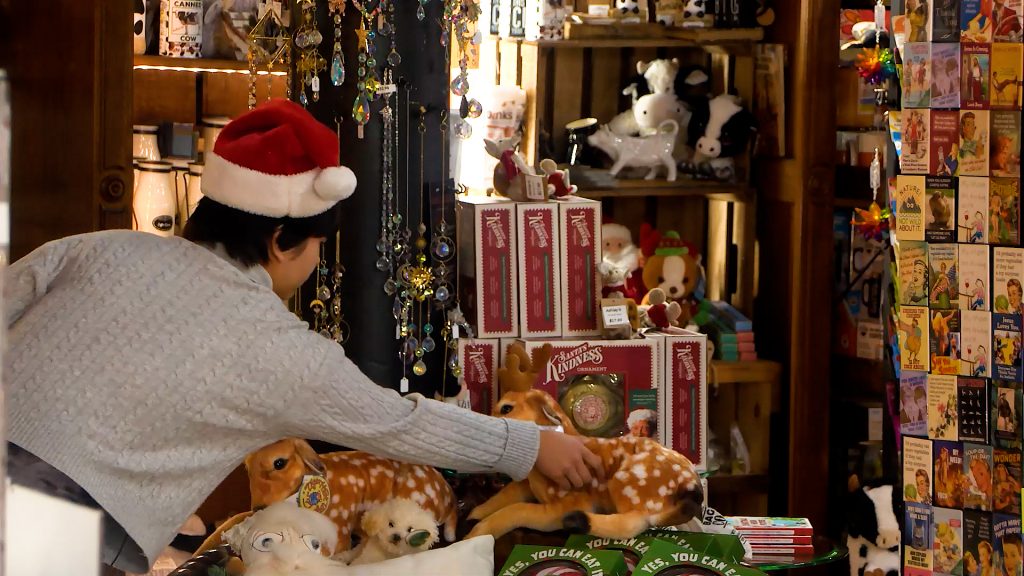
OMAHA, Neb. — On a cold weekday morning, the door chime at a small boutique rings again and again as shoppers move between displays of candles, ornaments and gift sets. The season looks busy from the outside. But for many stores, the rush tells only part of the story.
Shoppers return, but spending tells a different stories
At Ashley’s, a locally owned store in Omaha’s Old Market area, manager Rachel Miletto told Straight Arrow News that customers are filling baskets with smaller gifts and quick-add items.
“People are coming in and buying more stuff. So when they see more, they like to buy more, especially just little gadgets and things like that, for gifts and presents,” she said.
Some items, she added, are disappearing sooner than expected. A lot of things “are selling out quicker than last year,” she said.
The local activity mirrors national trends, but only on the surface. According to the National Retail Federation, Americans are expected to spend an average of $890.49 on holiday gifts and related purchases this year. It is the second-highest estimate on record, falling only $12 below last year’s peak. The NRF reported overall holiday sales could rise by 3% to 4%, a pace similar to pre-pandemic years.
Yet those forecasts come at a time when many households face a different economic reality. Recent delays in SNAP benefits, a rise in unemployment and weeks of missed paychecks for federal workers during the government shutdown have left families with tighter budgets heading into December.
“All these uncertainties make consumers hesitant to spend,” said Jane Liu, assistant professor of economics at the University of Nebraska Omaha.
Small businesses told SAN they can feel that hesitation almost immediately.
Local shops see steady foot traffic, lower purchases
In Omaha’s Little Bohemia district, Dusk Goods & Gifts owner Abby Massey said the season is off to a challenging start despite strong support for local shops.
“The people who are shopping are really wanting to shop local,” Massey told SAN. “There is another big push for that shop local, kind of similar to 2020. It does feel hard this year, harder than other years.”
Foot traffic has remained somewhat steady, she noted, but spending has pulled back.
“People are definitely spending less. We’ve had to kind of rethink what sort of items are in the store,” she said.
Massey stocks products from roughly 75 small makers, many of them independent brands. She said the cost pressures facing small retailers continue to build.
“It just doesn’t feel like it ever gets easier, and you just have to, like, keep grinding,” she said.
National surveys show shoppers across the country feel similar strain. A new WalletHub report found that nearly two in three Americans expect the economy to make the holidays less enjoyable this year. About 85% said they plan to spend the same amount or less than last year.
Economists track signs of a cooling labor market
Labor market uncertainty continues to shape consumer decisions, Liu said.
“If people don’t have a job, people don’t have income, people will not spend and firms will not be able to sell any goods,” she told SAN. “So it’s a cycle.”
Liu said national data shows cooling across most sectors.
“The labor market is weak, inflation pressure is still high, and the new job openings are decreasing,” she said. These conditions, Liu added, are pushing lower- and middle-income households to focus on discounts and value.
“Consumers are looking for values, especially for low-income and medium-income households. But for high-income households, we don’t see that — especially high-income consumption for luxury trips, vacations, those consumption are still very strong.”
The Kansas City Federal Reserve, which oversees the district that includes Nebraska, reported that consumer spending declined slightly in recent weeks. The Beige Book noted that households have become more price sensitive, which has led to sharper swings in demand during sales and promotional events.
Even with tighter budgets, many consumers continue to rely on credit.
One in three plan to apply for a new credit card to help cover holiday expenses, according to WalletHub. That will likely add to debt, more than a quarter of Americans said they are still carrying debt from last year’s holiday shopping season.
“Credit is still easy to access, especially with the recent interest rate cut,” Liu said. That access, she explained, is one reason holiday spending appears stable despite broader economic uncertainty.
Looking ahead, Liu said many analysts expect gradual improvement in the new year.
“In 2026 the economic outlook tends to be optimistic. People expect more jobs will be created,” she said.
For now, though, local shop owners and customers are navigating a season shaped by mixed signals: strong national forecasts, cautious household budgets and a continued push to support small businesses.
The post How holiday shopping sales predictions are masking the strain on family budgets appeared first on Straight Arrow News.
Ella Rae Greene, Editor In Chief