Supreme Court to rule on whether federal court has jurisdiction in state case
In five cities across New Jersey, First Choice Women’s Resource Centers offer free pregnancy tests, ultrasounds and scans for sexually transmitted diseases. “Our mission is clear,” the nonprofit’s website says, “… to encourage and equip women and men to make informed pregnancy decisions.”
The state attorney general says the centers are frauds. Officials say First Choice facilities masquerade as abortion clinics to deceive women or dissuade them from terminating their pregnancies.
As part of an investigation into allegedly deceptive practices, Attorney General Matthew Platkin issued a subpoena in 2023 to the nonprofit organization that runs the facilities, seeking a list of donors and other internal records. First Choice balked, filing a lawsuit claiming the subpoena violated its First Amendment rights.
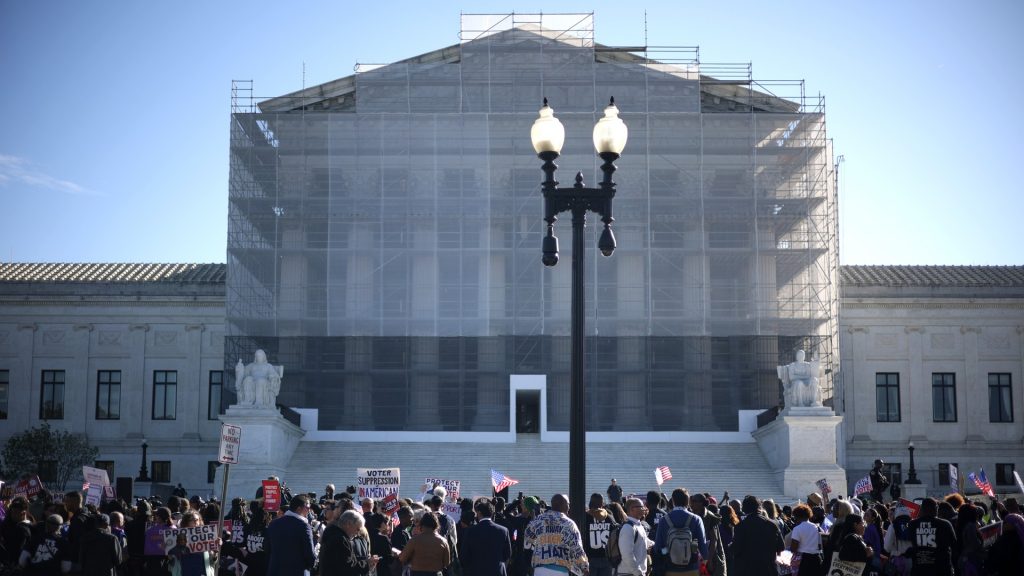
Two years later, the case has escalated to the nation’s highest court. On Tuesday, the Supreme Court will hear oral arguments on whether First Choice should be allowed to pursue its lawsuit in federal court.
The question
The nonprofit’s appeal is narrow in scope, centered on a single, two-part question: Can a federal court block a state subpoena on First Amendment grounds — or must the matter be litigated in a state court first?
“This is a case which is going up to the Supreme Court, it appears, not on the question of whether the subpoena issued by the state violates the Center’s First Amendment rights — although the Court may well reach that issue — but on the question whether the federal courts have jurisdiction over the case before the New Jersey state courts rule on whether and to what extent the subpoena is valid,” Jeffrey Robbins, a litigation partner at Saul Ewing Arnstein & Lehr who specialties in the First Amendment, told Straight Arrow News.
This suit raises questions about the federal government’s right to intervene in state matters, a legal issue playing out in courts across the nation.
How the Supreme Court rules could affect state investigations and, more generally, the power states have.
Deceptive practices investigation
In 2022, Platkin issued a warning to consumers regarding First Choice, which operates five centers in New Jersey. First Choice’s website invites women considering an abortion to “learn more about the abortion pill, abortion procedures, and your options in New Jersey.”
The website contains “medical statements … that may be misleading or untrue,” Platkin said in a legal filing with the Supreme Court.
First Choice is among nearly 3,000 pregnancy crisis centers in the U.S. Critics accuse them of posing as abortion clinics to lure women into their facilities before providing inaccurate information to persuade them not to have abortions.
First Choice denies it has acted deceptively. It said it is vocal and clear about its opposition to abortion.
First Amendment rights
First Choice argues that the First Amendment guarantees its rights of free speech and association. That includes maintaining the privacy of its donors, it says.
But a federal district court dismissed the case, saying a state court first needed to rule whether the subpoena should have been issued in the first place.
“The Center argues that the issue of whether the subpoena is valid is ‘ripe’ for adjudication by the federal courts right now, and that the subpoena violates First Amendment precedent — including Supreme Court precedent — prohibiting inquiries into organizations’ donors,” Robbins said. “The New Jersey Attorney General argues that because there has not yet been a state court ruling on the validity of the subpoena, the federal courts should not take the case in its present posture.”
The 3rd U.S. Circuit Court of Appeals ruled — in a split decision — that the case is not ripe for federal court. The Supreme Court decided in October to hear the case.
The case has implications beyond New Jersey and the pregnancy centers. Protecting donor privacy is a core issue at many nonprofits, which may argue, as First Choice has, that a subpoena for records revealing donor names chills First Amendment rights.
The Supreme Court could use the case to address the rights of pregnancy centers and other nonprofits, Robbins said.
“Given the underlying ‘political’ nature of the dispute and the disposition of the Supreme Court on the question of abortion,” he said, “it may well be that the Court will not confine itself to the jurisdictional issue, but may take the opportunity to issue a ruling that extends beyond that.”
The post Supreme Court to rule on whether federal court has jurisdiction in state case appeared first on Straight Arrow News.
Ella Rae Greene, Editor In Chief