FCC pulls ID shield from CA free internet program, risking immigrant data
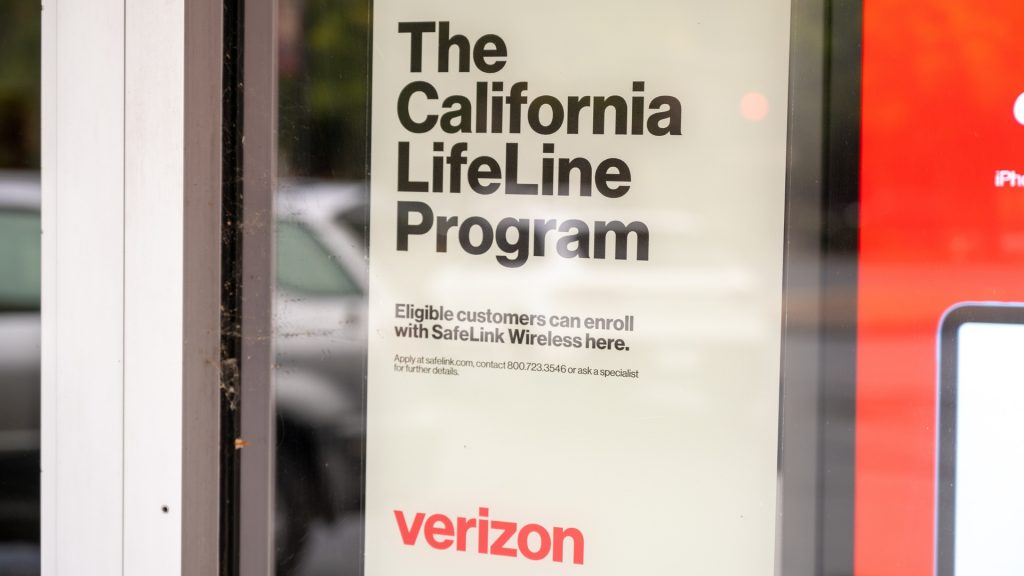
The Federal Communications Commission announced they are revoking California’s “opt‑out” status from the federal Lifeline Program, citing the state’s recent law prohibiting the collection of Social Security numbers and blocking data sharing. That ruling could expose the personal data of low-income immigrants to federal immigration enforcement.
Federal Lifeline Program
The federal Lifeline Program began in 1985 under former President Ronald Reagan to provide phone service to low-income residents.
“There’s always been a fee associated with having phone service, and I think the government recognized the importance, for health and safety reasons, of having a phone,” Amy Gonzales, associate communications professor at UC-Santa Barbara, told Straight Arrow News.
The next major change came in former President Bill Clinton’s Communications Act in 1996. It required the FCC to make “Nation-wide, and world-wide wire and radio communication service with adequate facilities at reasonable charges” available to everyone in the country.
The program was still limited to people in the country legally.
In May 2016, it evolved to include broadband internet.
“The internet is not a luxury, it’s a necessity,” former President Barack Obama said at the time. “You cannot connect with today’s economy without having access to the internet.”
The program now gives phone and internet services to millions of low-income Americans.
“When people didn’t and don’t have reliable phone service, especially if you are a low-income individual who often works shift work, or has side jobs to make ends meet, you need to have your phone so that people can reach you to do that work,” Gonzales said. “To pick up extra shifts, staying in touch with child care providers and just staying in touch with our social support networks.”
California changes
California runs a separate “lifeline” program that’s similar to the federal subsidy. Since they both included identity verification processes, the federal government allowed the state to opt out of the federal process in 2013. When the state enacted the law shielding information that would verify citizenship, U.S. Sen. Ted Cruz, R-Texas, wrote to Carr that the change invites unauthorized immigrants to apply. The late October letter listed similar concerns as Carr stated in his letter announcing the revocation.
Legislation signed last month by Gov. Gavin Newsom made it so that anyone on that program would not have their data shared with local, state or federal agencies, including immigration authorities.
It also no longer requires program providers to ask for Social Security numbers during enrollment, something the FCC said is used for verifying that recipients are eligible for the services.
“AB 1303 ensures that Californians can access essential communication services without fear of unnecessary government overreach,” Assemblymember Avelino Valencia, who authored the bill, said at the time. “This bill reinforces our commitment to protecting the privacy of residents who rely on the Lifeline Program.”
Roughly 1.7 million Californians are enrolled as of January 2025, including more than 500,000 in the Los Angeles area.
FCC pushback
The FCC said that new legislation makes it impossible for California to comply with the program’s integrity obligations. They specifically mentioned no longer collecting Social Security numbers which can be used to verify participants are legal residents.
“California also has a bad track record of complying with federal Lifeline program rules,” FCC Chairman Brendan Carr said in a statement. “Therefore, the FCC is revoking California’s ‘opt-out’ status and will now require federal Lifeline applicants in California to comply with the federal verification process that applies in nearly every other state. Federal dollars should not pay for California’s abuse of the Lifeline program.”
That change is expected to begin immediately.
“Once again, the Trump administration is attempting to weaponize assistance programs to attack vulnerable communities,” Izzy Gardon, a spokesperson for Newsom’s office, told SAN. “This program is funded through telecom companies, not the federal government. “This bill is part of California’s nation-leading efforts to protect individuals’ personal information. We will continue to fight for privacy and consumer protections to ensure personal information is not misused by any organization or against any individual.”
Impact
If immigrants without legal status now apply for the program, the new FCC policy means they could expose themselves to immigration authorities. If there are unauthorized immigrants who rely on the program, the change could lead to families losing the phone and internet access they’d previously relied on.
Immigrants with legal status who apply for the program will no longer have their data protected.
“Many of the immigrant and even nonimmigrant Latino communities, we know from other news, are removing themselves from churches and schools and doctors and other public spaces,” Gonzales said. “And so, my guess is that technology is playing an even larger role in keeping these people connected to the rest of the world, just as technology did for all of us during COVID.”
For students, losing internet access can have a real impact on their ability to learn.
“Increasingly, kids have to look things up just to do their homework,” Gonzales said. “So, I think there’s many different ways that students have to stay connected to the internet, and phones are often a part of that, especially in low-income households.”
The post FCC pulls ID shield from CA free internet program, risking immigrant data appeared first on Straight Arrow News.
Ella Rae Greene, Editor In Chief